Who Is the Best Custom O Ring Kit Manufacturer in China?
Choosing the best Custom O-Ring Kit Manufacturer in China requires more than comparing prices or browsing attractive product photos. The right partner should understand sealing performance, material behavior, and practical application risks. An experienced manufacturer can recommend silicone, EPDM, nitrile, FKM, or other compounds based on temperature, pressure, fluid exposure, and installation conditions.
Look closely at production details. A reliable supplier should control mold accuracy, compound consistency, flash removal, and dimensional inspection. Ask for clear material specifications, batch records, inspection reports, and sample approval procedures. Traceability matters. A kit containing neatly labeled rings, organized sizes, and durable packaging can save valuable time during maintenance or field service.
Small details reveal a lot.
This guide evaluates Chinese manufacturers through product quality, engineering support, customization capability, communication, and delivery reliability. It also considers whether suppliers can provide useful technical guidance instead of simply accepting a drawing. Certifications may support credibility, but they should be verified against the actual factory and product scope. No manufacturer is perfect, and every supplier has limitations worth examining. A low-cost quotation may hide inconsistent tolerances, weak packaging, or slow responses after delivery. That possibility deserves attention. By comparing evidence, asking precise questions, and testing samples in realistic conditions, buyers can make a more dependable decision. The best Custom O-Ring Kit Manufacturer is not merely the largest exporter. It is the partner that consistently delivers suitable materials, accurate kits, transparent documentation, and responsive technical support.
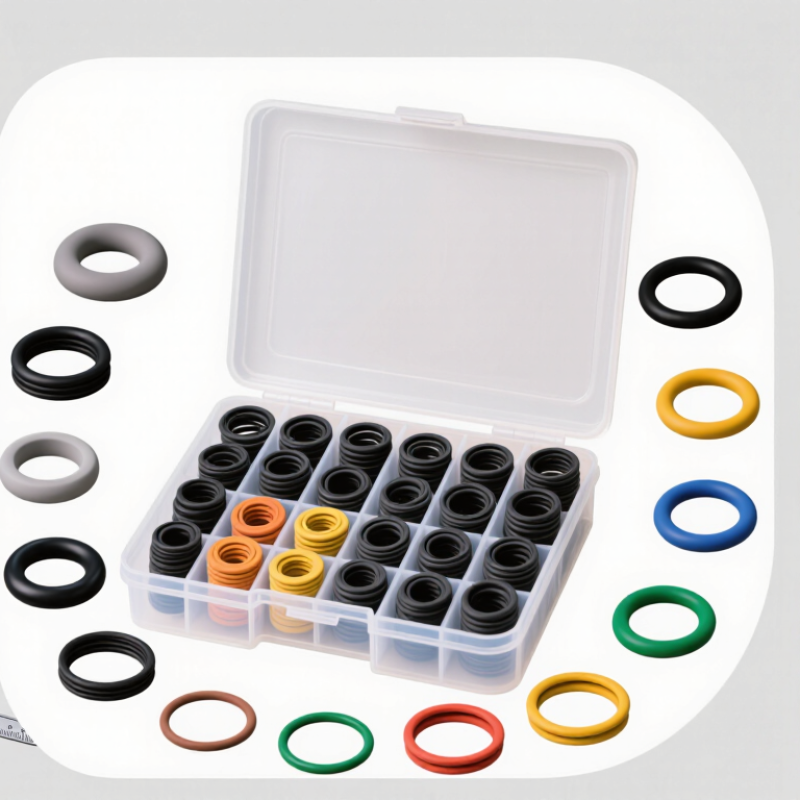
Define the Best Custom O-Ring Kit Using ISO 3601 and AS568 Standards
Who Is the Best Custom O-Ring Kit Manufacturer in China?
The best custom O-ring kit manufacturer is not defined by price alone. It should control dimensions, materials, documentation, and testing. ISO 3601 establishes O-ring size, tolerances, and quality requirements for international applications. AS568 provides standardized dash numbers and inch-based dimensions. A reliable supplier should understand both systems and explain their differences clearly.
A 2024 industrial seals market report valued the global market at approximately US$14 billion in 2023. It also forecast annual growth of nearly 6% through 2030. This demand increases the need for traceable kits, especially in hydraulic, pneumatic, and maintenance work. Look for inspection reports, material certificates, batch numbers, and controlled packaging. Customization should include compound selection, hardness, color, quantity, and kit labeling. No supplier is perfect. Even a good drawing can contain unclear sealing conditions.
Tips: Ask for samples before bulk production. Check the actual cross-section with calibrated tools. Confirm whether the quoted size follows ISO 3601 or AS568. Request temperature, pressure, fluid-compatibility, and compression-set data. A short trial can reveal poor fit, swelling, or leakage. Do not rely only on a certificate. Review the test method and acceptance limits. Experience matters, but documented evidence matters more.
Compare NBR, FKM, EPDM, and Silicone Across −40°C to 200°C
Who Is the Best Custom O Ring Kit Manufacturer in China?
Choosing a custom O-ring kit starts with temperature, not catalog price. ASTM D1418 identifies NBR, FKM, EPDM, and silicone as distinct elastomer families. ISO 3601 also requires controlled dimensions for reliable sealing. NBR commonly operates near −40°C to 108°C, depending on formulation. It suits oils, hydraulic fluids, and cost-sensitive assemblies. FKM usually handles about −20°C to 200°C, with specialized grades reaching lower temperatures. It resists heat, fuels, and many chemicals. EPDM performs well from roughly −50°C to 150°C. It is effective with water, steam, and weather exposure. Silicone often covers −60°C to 200°C. However, it can tear more easily under abrasive movement.
A practical manufacturer should provide compound certificates, compression-set results, and batch traceability. ASTM D395 testing helps compare permanent deformation after compression. At 200°C, NBR is generally unsuitable for continuous service. At −40°C, standard FKM may become too stiff. That detail is often missed. A 2024 market analysis from Grand View Research also identifies rising demand for high-temperature sealing components, but market growth does not prove technical quality. I would request temperature-cycle data, not attractive brochures. The best Chinese custom O-ring kit manufacturer should explain formulation limits clearly, inspect every cavity, and supply samples tested in the actual fluid. A neat chart can mislead. Real assemblies are less tidy.
Who Is the Best Custom O-Ring Kit Manufacturer in China?
Material selection is a key factor in custom O-ring kit performance. The chart compares typical continuous service temperature ranges for NBR, FKM, EPDM, and Silicone across a practical range of −40°C to 200°C.
NBR is a cost-effective choice for general-purpose oil and fuel sealing. FKM provides strong high-temperature and chemical resistance. EPDM performs well with hot water, steam, and weathering, while Silicone offers the widest low-temperature flexibility. Actual limits depend on compound formulation, media compatibility, pressure, and exposure time.
Evaluate Manufacturers by 70–90 Shore A Hardness and ±0.05 mm Tolerance
Choosing the best custom O-ring kit manufacturer in China requires more than comparing unit prices. Hardness and dimensional control directly affect sealing reliability. ASTM D2240 measures rubber hardness on a 0–100 Shore A scale, making 70–90 Shore A an easily verified purchasing range. Ask for batch test records, not only a specification sheet.
A capable factory should control each compound within the requested hardness window, such as 75 ± 5 Shore A. Technicians should test samples after conditioning them at room temperature. Small details matter. ISO 3601-1 provides recognized guidance for O-ring dimensions and tolerances, but ±0.05 mm is not automatically guaranteed for every size. The supplier must identify the measured diameter, cross-section, instrument resolution, and inspection method.
For custom kits, request a first-article report with at least three measurement points per critical dimension. A calibrated optical comparator or vision system can reveal flash, ovality, and surface defects. The report should also include lot numbers, cure dates, compound identification, and retest rules. These records support traceability and align with quality-management practices described in ISO 9001.
Do not accept perfect claims too quickly. Rubber changes with temperature, compression, and storage time. One overlooked issue is mixing hardness data from different durometers or test surfaces. Demand evidence. Compare several production lots, then verify ±0.05 mm independently before approving volume production. A lower quotation may hide weaker inspection discipline, inconsistent curing, or incomplete material records.
Audit ISO 9001, IATF 16949, Traceability, and 100% Inspection Systems
Who Is the Best Custom O Ring Kit Manufacturer in China?
A dependable custom O-ring kit manufacturer should pass more than a factory visit. The ISO Survey 2022 recorded 1,265,216 ISO 9001 certificates worldwide. That figure shows broad adoption, not automatic quality. Buyers must audit the actual production system behind each certificate.
Request the current ISO 9001 certificate, audit scope, and recent corrective-action records. For automotive applications, verify IATF 16949 certification and customer-specific requirements. Check incoming rubber inspection, compound identification, mold control, and curing records. A practical audit should follow one O-ring from raw material receipt to final packing. Every step needs a batch number, operator record, test result, and release approval. Small details matter.
Traceability should work within minutes, not days. Ask the supplier to retrieve a batch file during the audit. It should show hardness, tensile strength, elongation, dimensions, and inspection equipment status. The Rubber Manufacturers Association and ISO quality practices both emphasize controlled testing and documented process evidence. Still, 100% inspection requires careful questioning. Does it include dimensional checks, visual defects, or both? Are gauges calibrated? Is inspection data retained?
A certificate can be genuine yet incomplete. That is the uncomfortable part. Supplier performance depends on daily discipline, not wall displays. I would also review rejected samples, because clean records may hide weak reporting. A transparent manufacturer shares problems, containment actions, and verification results before shipment.
